

Yapahuwa
Climb a steep, lion-flanked stairway carved into a 90-metre granite outcrop — the last resting place of the Sacred Tooth Relic before it reached Kandy, and one of Sri Lanka’s most striking, least-crowded ancient capitals.
Book This Tour →A fortress capital carved into stone.
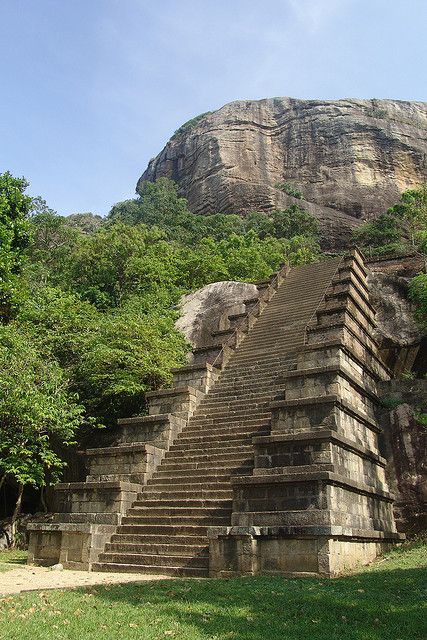
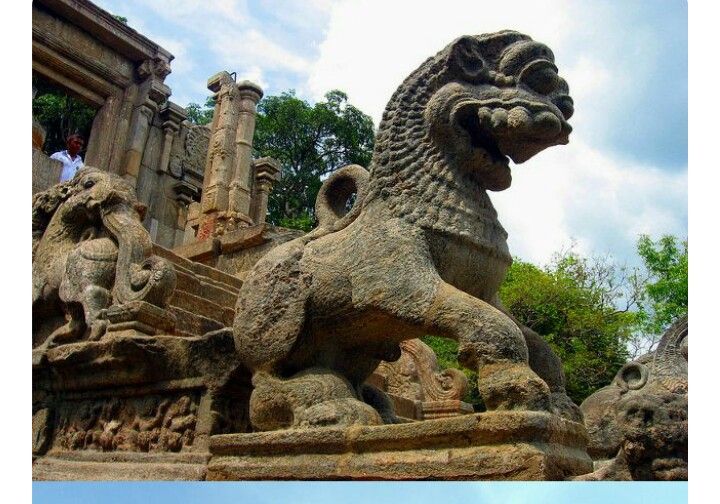
For just eleven years in the late 13th century, Yapahuwa was the capital of Sri Lanka. King Buvanekabahu I built his palace and stronghold atop a huge granite boulder rising abruptly from the northern plains, bringing the Sacred Tooth Relic of the Buddha with him for safekeeping. Today, its steep ornamental staircase — guarded by carved lions and mythical Makara balustrades — remains one of the finest examples of medieval Sinhalese stone artistry, and the fortress that inspired the design on Sri Lanka’s ten-rupee note. Often compared to the more famous Sigiriya, Yapahuwa offers a similar sense of drama with a fraction of the crowds.
“A steep stone stairway, carved lions, and a fortress capital that lasted just eleven years.” North Western Province, Sri Lanka
Getting There

An Eleven-Year Capital Under Siege
For history lovers, Yapahuwa captures a single dramatic chapter of medieval Sri Lanka.
King Buvanekabahu I moved the Sacred Tooth Relic here from Dambadeniya in 1273, following the ancient tradition that possessing it legitimised a king’s rule over Sri Lanka.
After the king’s death in 1284, Pandyan invaders from South India captured the relic and carried it away, ending Yapahuwa’s brief but pivotal role as capital.
Medieval Stone Carving at Its Finest
For anyone drawn to craftsmanship, Yapahuwa’s staircase is a masterpiece in miniature.
Intricately carved dancers, musicians and mythical Makara balustrades decorate the stone doorway at the top of the staircase — among the finest surviving examples of the era’s artistry.
A perforated stone window discovered here, the Sivumenduru Kavuluwa, is now displayed at the National Museum in Colombo as a masterwork of medieval stone tracery.
Activities & Nearby Attractions
Beyond the temple ruins, a short, steep trail leads to the very top of the rock for panoramic views over the surrounding plains.
A small museum at the base displays stone sculptures and coins unearthed here, hinting at Yapahuwa’s ancient trade connections as far as China.
Yapahuwa pairs naturally with nearby Dambadeniya and Panduwasnuwara, two other short-lived medieval capitals of Sri Lanka’s North Western Province.
Two moments to remember
Standing before the guardian lions at the top of the staircase, where local legend says a hidden treasure lies in the direction of their gaze.
Reaching the summit rewards climbers with sweeping, uninterrupted views across Sri Lanka’s dry-zone plains — usually without another visitor in sight.
Things you’ll do
Walk through the outer and inner fortifications that once protected the royal city at the rock’s base.
Ascend the three tiers of steps to the carved lion gateway and the ruins of the Tooth Relic Temple.
See sculptures and trade coins recovered from the site before heading back down.
When to Visit
Best times to visit, weather & wildlife.
Best Time of Day
Arrive early, just after sunrise, when temperatures are cooler and the site is quiet and tranquil.
Dry Season Visits
Yapahuwa sits in Sri Lanka’s dry zone, so conditions are generally good year-round, with the driest, clearest weather from January to April.
What to Bring
Comfortable, closed shoes for the steep, narrow steps, plus water, sun protection and a hat — shade is limited at the top.
Three reasons Yapahuwa stands apart.
Sigiriya’s Quieter Cousin
Built in a similar style to the famous Lion Rock, Yapahuwa offers a comparable sense of drama and history with almost none of the crowds.
Guardian of the Tooth Relic
Yapahuwa briefly held Sri Lanka’s most sacred Buddhist relic, the same one now enshrined at Kandy’s Temple of the Tooth.
A National Icon
The fortress’s carved lion staircase was once so significant it featured on Sri Lanka’s ten-rupee currency note.
“Go early, climb slowly, and take the extra ten minutes to reach the summit.”
With Fly By Travels, we schedule your visit for the cool, quiet hours after sunrise, pair it naturally with nearby Dambadeniya or Anuradhapura, and make sure you have time to reach the true summit — not just the staircase — for views most visitors to Sri Lanka’s ancient capitals never see.