

Sinharaja Forest Reserve
Step into Sri Lanka’s only UNESCO-listed tropical rainforest — a primeval sanctuary that has endured for millions of years and remains the country’s last significant stretch of primary rainforest.
Book This Tour →A living rainforest older than recorded history.
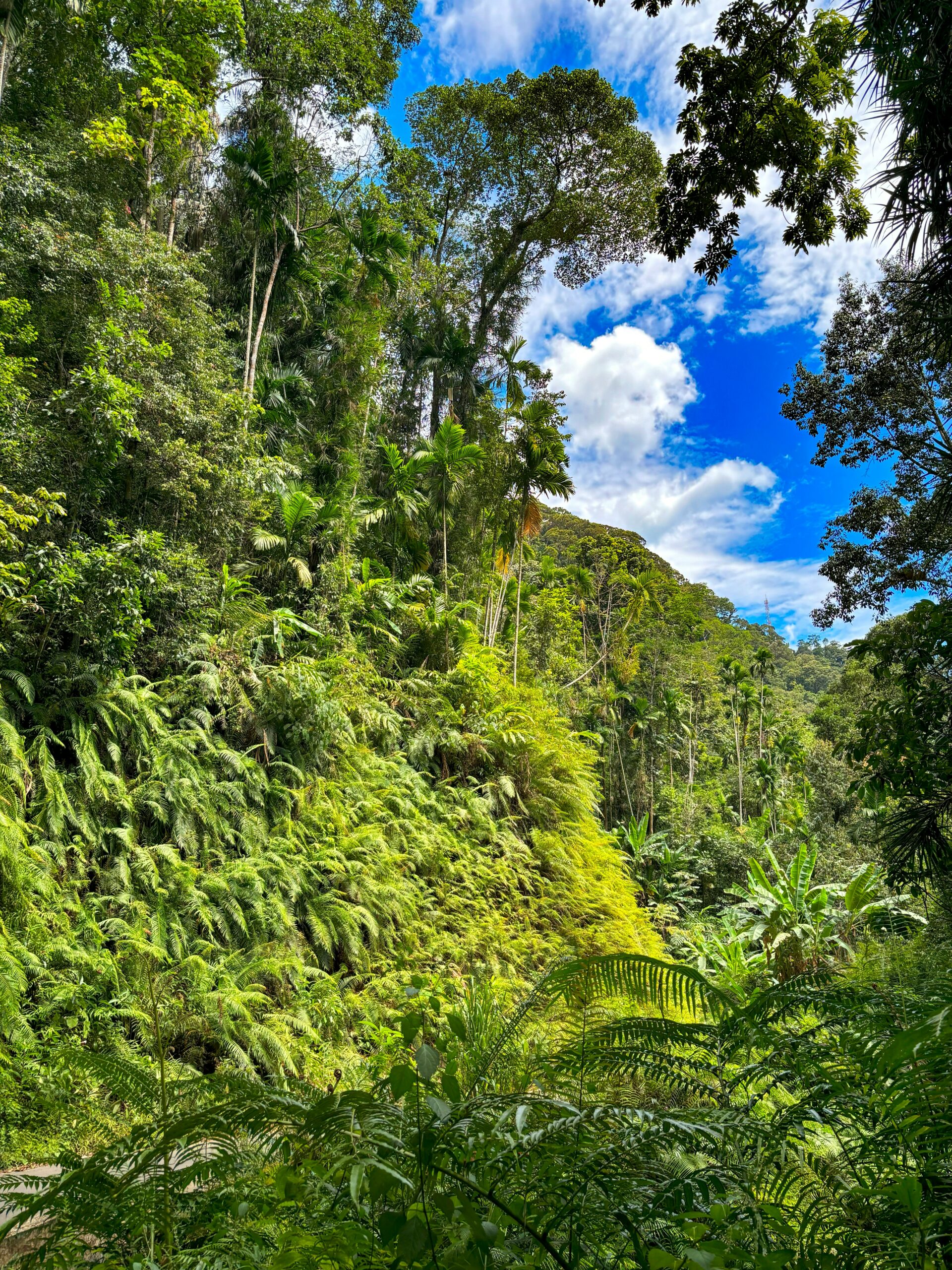
Beneath Sinharaja’s dense, multi-layered canopy, the air stays thick with moisture and the forest’s constant chorus never quite stops. As the last viable stretch of primary tropical rainforest left in the country, it offers travelers a raw, unfiltered encounter with nature at its oldest and purest.
“Perpetual twilight beneath the canopy, and a chorus that never stops.” Sabaragamuwa–Southern Province Border, Sri Lanka
Getting There
Capturing the Bird Wave
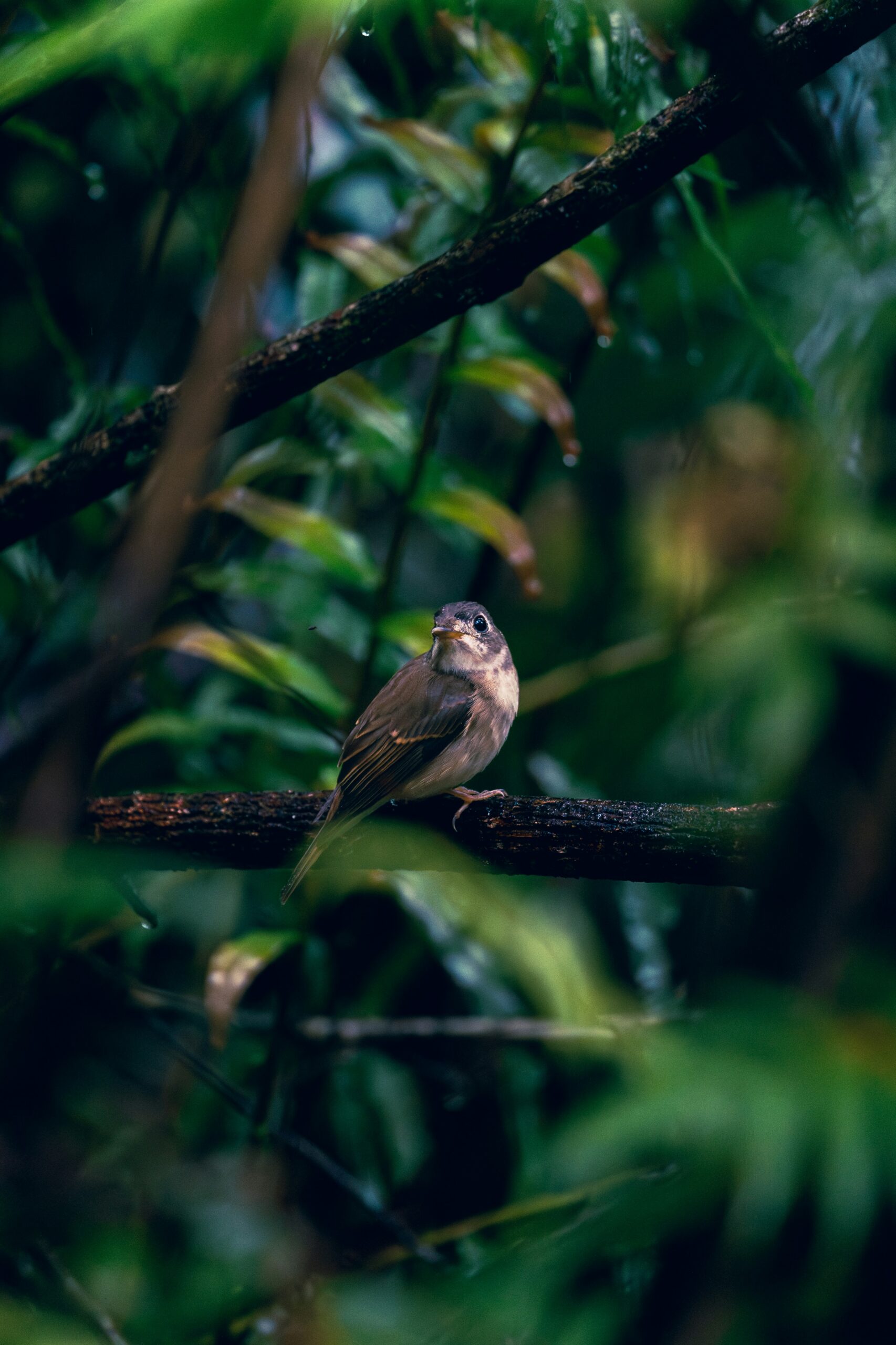
For wildlife photographers, Sinharaja is a genuine bucket-list destination, famous for its mixed-species feeding flocks.
Dozens of species — including the Sri Lanka Blue Magpie, Red-faced Malkoha, and Greater Racket-tailed Drongo — sweep through the forest together in a fast-moving hunt, a striking burst of color against the misty green canopy.
Beyond the birds, the forest floor rewards close-up photography with fluorescent fungi, rare orchids, the endemic Hump-nosed Lizard, and colourful tree frogs.
A Bastion of Endemism
For students of nature, Sinharaja is one of the richest field sites in South Asia.
More than 60% of the trees found here are endemic to Sri Lanka, many of them rare or restricted to this single reserve.
The forest is also a living pharmacy of plants used in traditional Hela Wedakam medicine — a local tracker can point out the bark, leaves, and roots long used for healing.
Activities & Hidden Gems
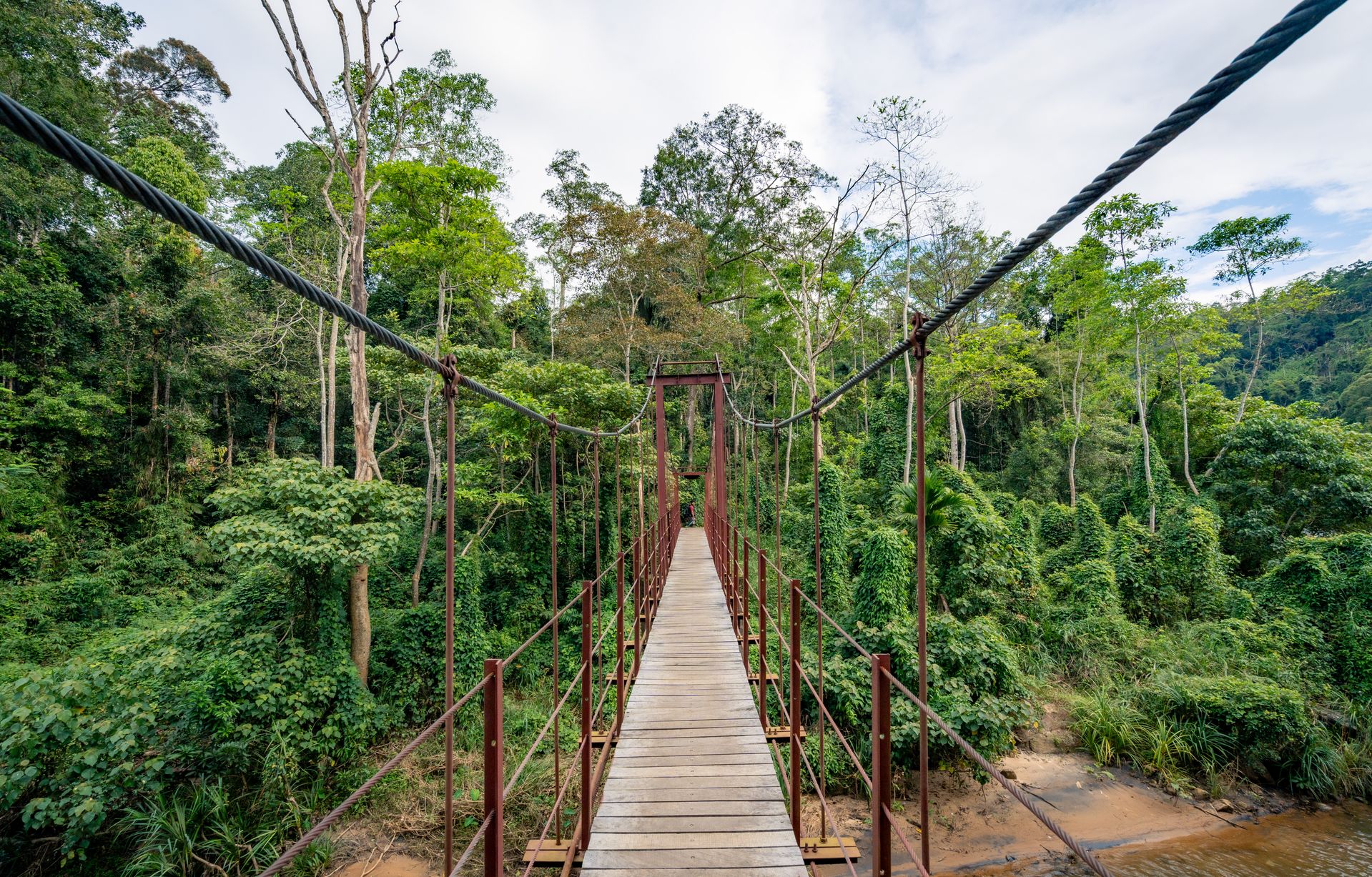
Hidden deep within the core zone, these pristine waterfalls are reached by a trek through giant ferns and towering Dipterocarpus trees that feels genuinely prehistoric.
A guided night walk reveals the forest’s after-dark side, from the glowing eyes of the slender loris to bioluminescent fungi scattered across the forest floor.
Of Sri Lanka’s 33 endemic bird species, more than 20 can be found within Sinharaja’s boundaries.
Two moments to remember
Catching a mixed-species bird wave move through the canopy at first light is one of Sinharaja’s signature wildlife moments.
On a night trek, bioluminescent fungi can make patches of the forest floor appear to glow like scattered stars.
Things you’ll do
Follow an experienced guide through the canopy in search of Sinharaja’s famous mixed-species feeding flocks.
Trek through ancient rainforest to reach Duvili Ella or Kekuna Ella, waterfalls few visitors ever see.
Head out after dark with a tracker to spot nocturnal wildlife most day visitors never encounter.
When to Visit
Best times to visit, weather & practical wisdom.
Dry Windows (Jan–Mar, Aug–Sep)
These months offer the best chance of avoiding Sinharaja’s heaviest rains — and its leeches.
The Leeches
Leeches are simply a sign of a healthy rainforest; leech socks and traditional remedies make treks comfortable and worry-free.
Climate & Gear
Expect constant humidity between 22–28°C year-round, and pack waterproof protection for cameras and equipment.
Three reasons Sinharaja stands apart.
Sri Lanka’s Last Primary Rainforest
As the country’s only UNESCO World Heritage tropical rainforest, Sinharaja preserves one of the last viable stretches of primary forest left on the island.
The Bird Wave Phenomenon
Mixed flocks of endemic birds moving together through the canopy at dawn make Sinharaja one of Asia’s premier birdwatching destinations.
A World of Rare Endemics
With over 60% of its trees found nowhere else on Earth, Sinharaja is one of the most biodiverse forests in South Asia.
“Stay overnight for the Deep Forest Immersion — it’s when serious photographers and nature lovers see this rainforest at its liveliest.”
With Fly By Travels, we do more than drop you at the gate. We connect you with knowledgeable naturalist guides, keep your camera gear safe in comfortable, climate-controlled vehicles, and get you back to a cool sanctuary after a humid day in the wild.