

Sigiriya
Rising 200 metres above the emerald jungles of the Cultural Triangle, this 5th-century rock fortress was King Kashyapa’s vision brought to life — a palace built atop a sheer granite peak, surrounded by gardens and water systems that still function today.
Book This Tour →One of the world’s most sophisticated feats of ancient urban planning.
To stand before Sigiriya is to witness engineering that defied nature itself. The rock fortress, palace ruins, and surrounding gardens form a UNESCO World Heritage Site that has awed visitors for over 1,500 years — a place where ancient power, architectural genius, and artistic brilliance meet.
“A palace on a sheer granite peak, and gardens still alive fifteen centuries later.” Cultural Triangle, Sri Lanka
Getting There


Gardens & Frescoes
Before you even begin the climb, Sigiriya reveals centuries of artistry and engineering.
Long before the climb begins, visitors walk through some of the oldest landscaped gardens in the world, where symmetrical pools and gravity-fed fountains offer cooling calm before the ascent.
Halfway up the rock, a sheltered gallery holds the famous 1,500-year-old frescoes of celestial maidens, painted in natural pigments that have kept their vivid colour for centuries.
Mirror Wall & Summit Gateway
The final stretch of the climb carries some of Sigiriya’s most storied features.
Once polished brightly enough to reflect the king’s image, this wall now carries centuries-old inscriptions and verses left by visitors as far back as the 6th century.
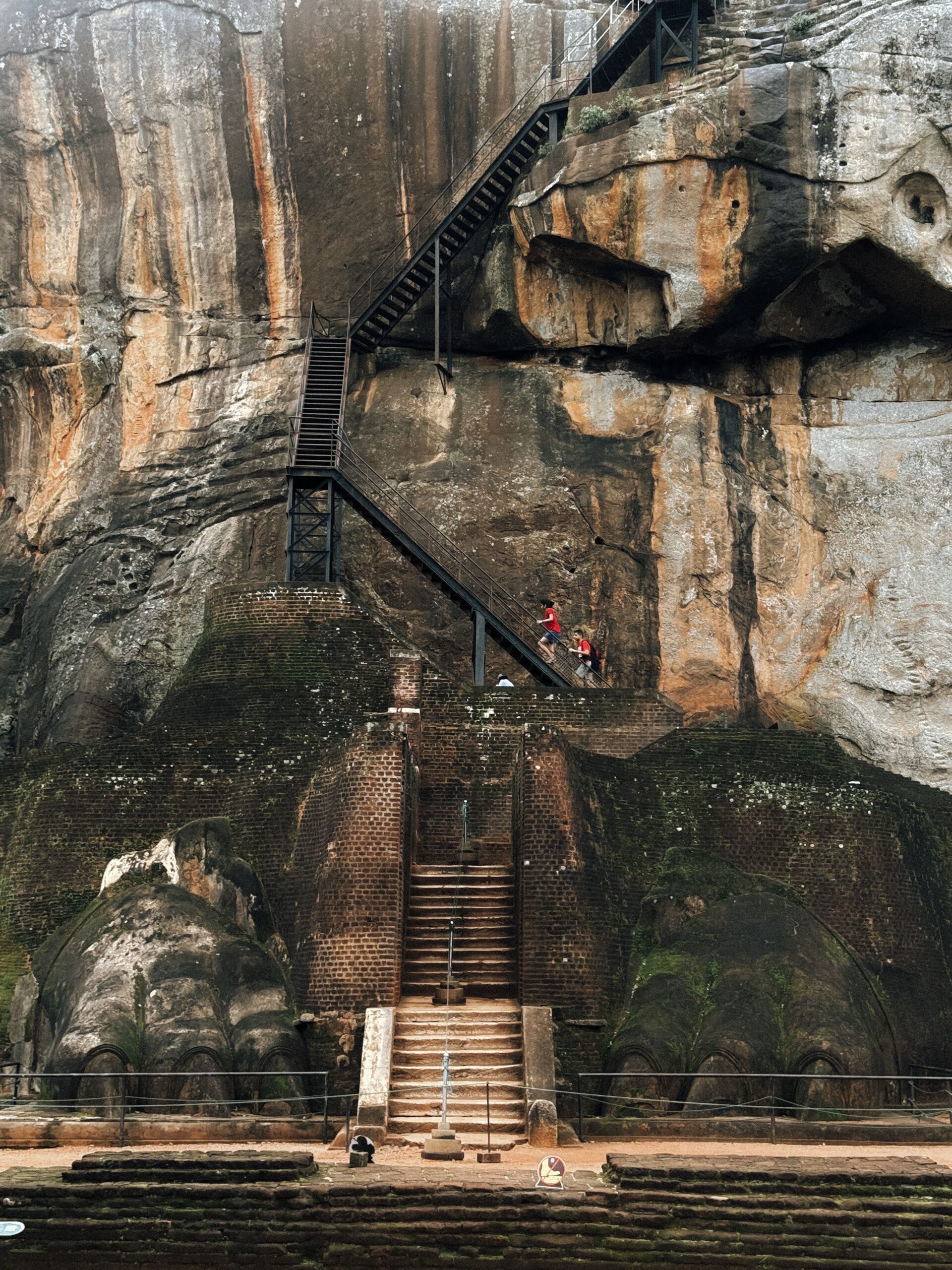
The last ascent begins between two colossal lion paws carved directly into the rock, a dramatic gateway that once held a giant lion’s head.
Hidden Gems & Value Adds
For the most iconic view of Sigiriya itself, a pre-dawn hike up neighbouring Pidurangala Rock rewards early risers with the Lion Rock silhouetted against a gold-and-purple sky.
Boulders and caves surrounding the base, including the distinctively shaped Cobra Hood Cave, hint at the quiet monastic life that predates the palace above.
From the top, 360-degree views stretch across the Cultural Triangle’s plains and forests, best appreciated during the clear-sky months from December to April.
Two moments to remember
Watching dawn break behind Sigiriya from Pidurangala Rock is one of the Cultural Triangle’s most photographed moments.
Standing before the 1,500-year-old frescoes partway up the climb is a rare, direct encounter with ancient artistry.
Things you’ll do
Ascend roughly 1,200 steps past the water gardens, frescoes, and Mirror Wall to the summit ruins of King Kashyapa’s palace.
Head up the neighbouring rock before sunrise for the definitive photograph of Sigiriya rising above the jungle.
Wander the boulders and monastic caves surrounding Sigiriya’s base, including the Cobra Hood Cave.
When to Visit
Best times to visit, weather & attractions.
Beat the Heat
Starting the climb at 6:30 AM avoids the tropical midday heat and lets you reach the summit in relative peace before the larger crowds arrive.
Clear Horizon
From December to April, skies are at their clearest, offering 360-degree views that stretch as far as the Ritigala mountains.
Climate & Comfort
Expect warm, dry conditions between 28°C and 34°C — light clothing, a hat, and plenty of water are essential for the 1,200-step climb.
Three reasons Sigiriya stands apart.
The Lion Rock
Also known as Lion Rock, Sigiriya is an ancient rock fortress and UNESCO World Heritage Site rising dramatically from the surrounding plains.
The Mirror Wall & Frescoes
Along the climb, centuries-old frescoes and the once-polished Mirror Wall carry layers of ancient artistry, poetry, and graffiti.
The Hidden Symbolism
A knowledgeable guide can reveal the architecture’s hidden symbolism, from the Lion’s Paw entrance to the royal water gardens below.
“Sigiriya isn’t just a climb — it’s a journey into the heart of Sri Lankan history.”
With Fly By Travels, your journey to the Lion Rock is seamless from start to finish. After the climb, our air-conditioned vehicles give you the perfect place to relax and reflect on everything you’ve just witnessed.