

Polonnaruwa
After the glorious era of Anuradhapura, Polonnaruwa rose in the 11th century as Sri Lanka’s second great capital. Walking through its ruins feels like stepping into a meticulously planned royal city — one that showcases the height of ancient stone craftsmanship and hydrological engineering.
Book This Tour →Sri Lanka’s medieval capital, frozen in stone.
This UNESCO World Heritage city is a testament to a golden era of prosperity and artistic brilliance, from the grand palaces of kings to massive reservoirs that resemble inland seas. Every ruin here reflects the traditional pride and ambition of a civilization at its architectural peak.
“Not even a drop of rain shall flow into the ocean without being useful to man.” King Parakramabahu the Great, 12th century
Getting There
The Royal Quarter
Before reaching the famous rock carvings, Polonnaruwa’s royal and religious quarter reveals the scale of this medieval capital.
Once a seven-story structure with a thousand rooms, the ruins of this grand palace still evoke the royal majesty that once ruled the island.
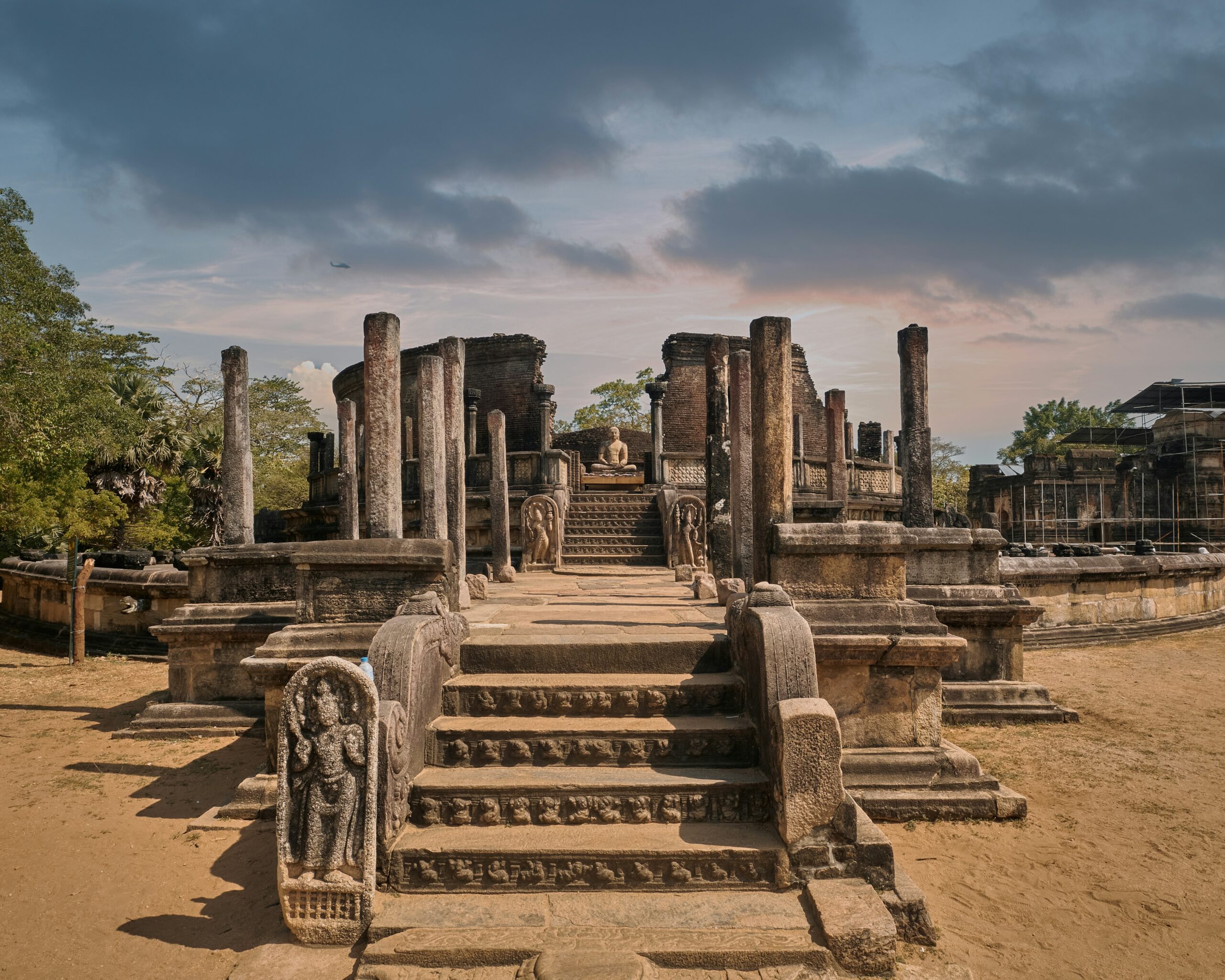
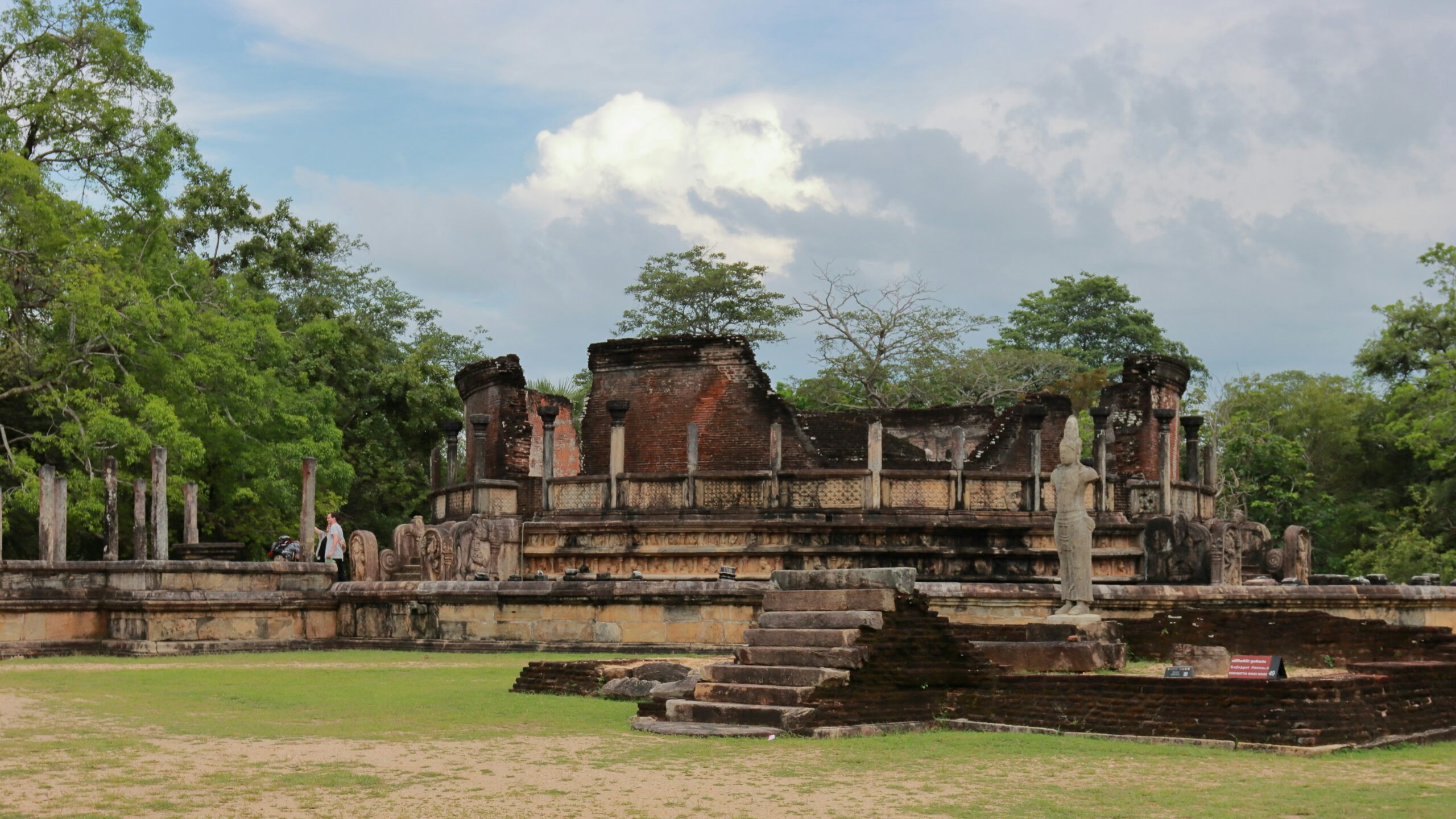
A lotus-shaped granite bath showcases the artistic flair of ancient landscapers, while the towering Lankatilaka Image House still shelters a giant, headless Buddha statue.
Stone Carved to Perfection
Polonnaruwa’s finest craftsmanship is found in its granite monuments, each one a masterclass in ancient engineering and art.
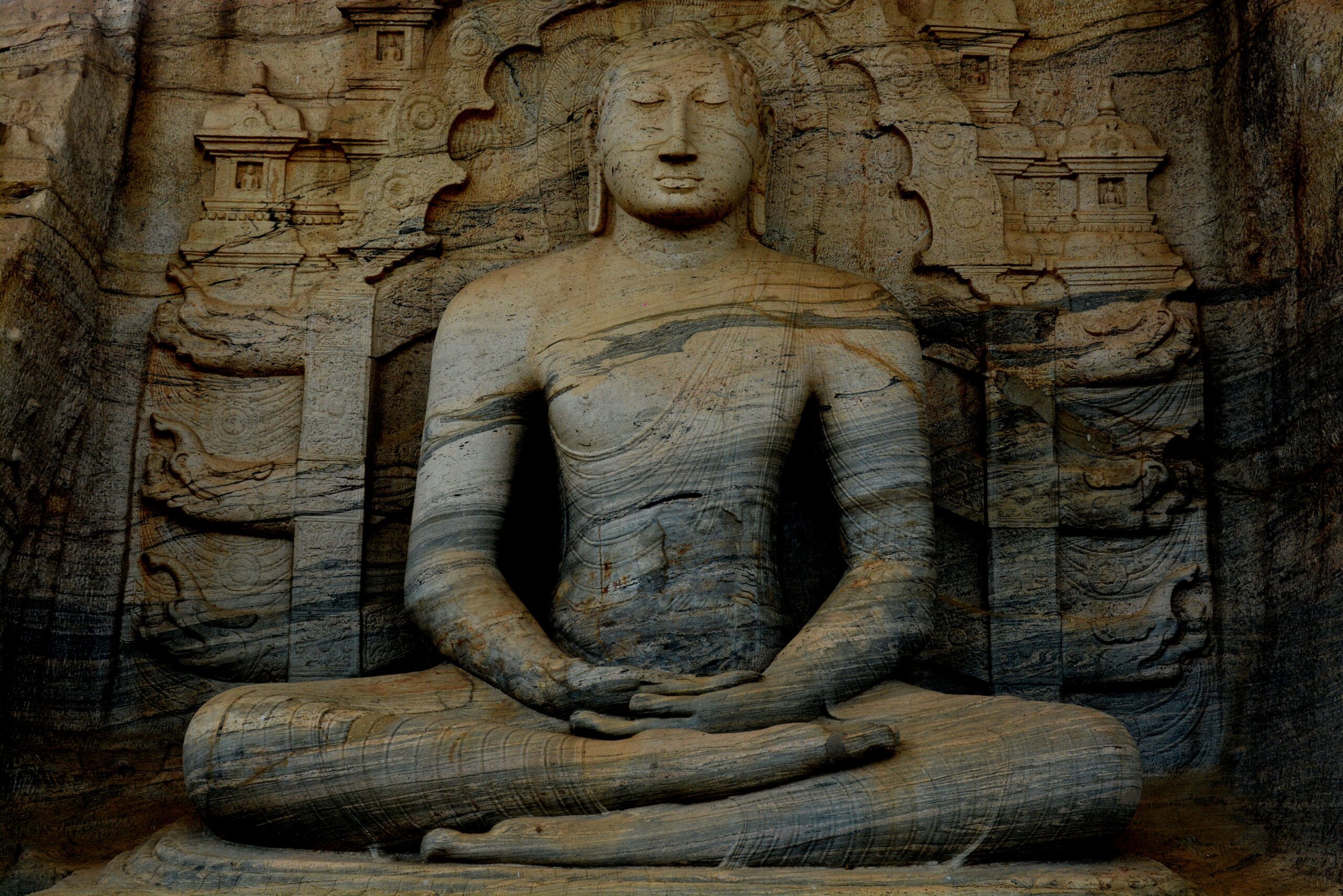
The spiritual soul of Polonnaruwa, this rock monastery features four massive Buddha statues carved from a single granite face, their serene expressions ranked among the finest examples of ancient world art.
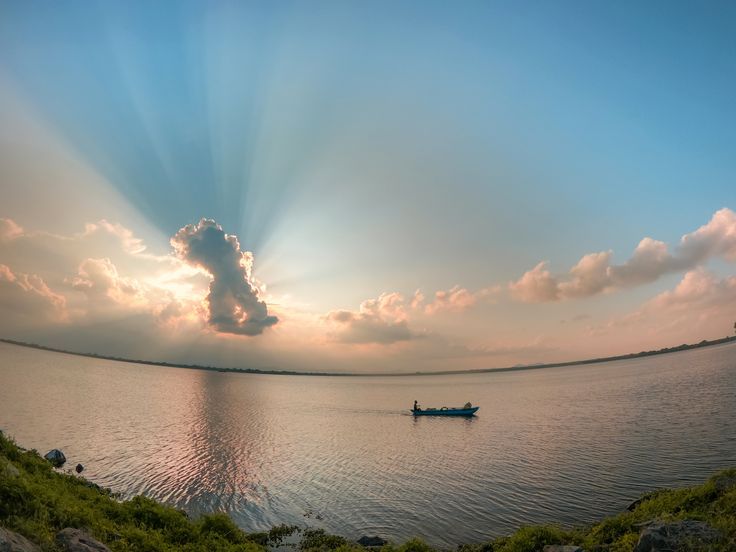
The circular Vatadage protects a sacred stupa behind finely carved guard stones and moonstones, while the vast Parakrama Samudra reservoir still irrigates the emerald fields surrounding the city.
Activities & Ways to Explore
A bicycle tour through the shaded ruins lets you feel the breeze and discover hidden corners most travelers miss on foot.
Set aside quiet time at the rock temple to take in all four Buddha statues carved into the granite outcrop.
Wander one of the best-preserved archaeological cities in South Asia, from the royal palace ruins to the ancient audience hall.
Two moments to remember
Standing before the Gal Vihara’s serene reclining Buddha, carved from a single granite face, is one of Polonnaruwa’s most powerful moments.
Watching early light spread across the vast Parakrama Samudra reservoir captures the scale of this ancient engineering feat.
Things you’ll do
Pedal along shaded paths connecting the palace, temples, and monuments of the ancient citadel.
Take in the four Buddha statues carved directly into a single granite rock face.
Explore the remains of King Parakramabahu’s seven-story palace and its surrounding halls.
When to Visit
Best times to visit, weather & attractions.
The Golden Hours
Explore the site in the early morning (7:00 AM) or late afternoon (4:00 PM), when soft sunlight on the grey granite creates a magical atmosphere for photography.
Dry Season Bliss
May to September brings the driest, clearest weather; December to February is also pleasant for milder visits.
Climate & Comfort
Temperatures typically hover between 30°C and 34°C — light, breathable clothing and comfortable walking shoes suit the slow-paced exploration.
Three reasons Polonnaruwa stands apart.
The Medieval Kingdom
Once the medieval capital of Sri Lanka, Polonnaruwa’s ancient citadel remains one of the best-preserved archaeological cities in South Asia.
The Gal Vihara
Don’t miss this rock temple, home to four magnificent Buddha statues carved directly into a single granite outcrop.
Leisurely Bicycle Tours
A relaxed bicycle tour through the shaded ruins lets you feel the breeze and discover hidden corners most travelers miss.
“To truly feel the soul of this medieval kingdom, explore the shaded ruins on a relaxed bicycle tour.”
With Fly By Travels, your journey to this historical gem is handled with precision. Our comfortable, air-conditioned vehicles offer a cool retreat to relax in after your walk through history.